Showing posts with label Random House. Show all posts

Tuesday, October 2, 2012

62: A Model Kit by Julio Cortazar

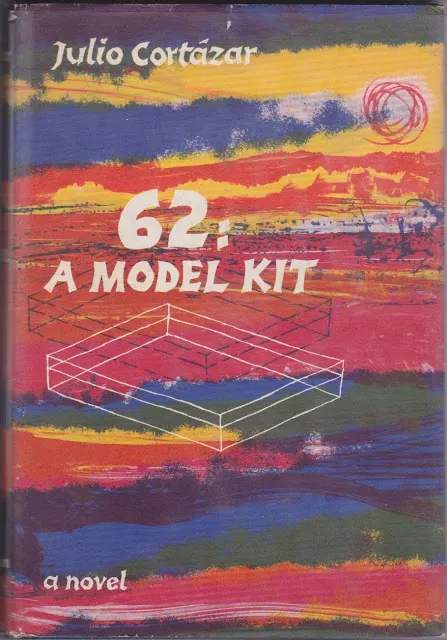
First US edition of 62: A Model Kit published by Pantheon/Random House in 1972
Julio Cortazar's fifth novel is an offshoot of chapter 62 from his mammoth book, Hopscotch, which is only a few pages long and recounts the outline for a potential novel from a few scraps of paper that the character Morelli is planning to write. The primary basis for the novel is that it takes place in a world wherein human behavior is indefinable by psychology. This novel, 62: A Model Kit is at the same time a continuation of that brief chapter about Morelli as much as it is a follow-through of the novel upon which the notes were based. Cortazar's slimmer, semi-sequel to Hopscotch isn't quite as good as its progenitor, but it is still a whimsical, interesting read about a pre-ordained world only Cortazar could have created where anything can take place. It can also be read independently of Hopscotch, which may appeal more to first-time Cortazar readers not brave enough to commit to a 500+ page read. This first edition features great companion cover art to Hopscotch by Kenneth Miyamoto—George Salter unfortunately died five years earlier, otherwise I'm pretty sure it's safe to say he would have done the jacket design for this book as well.

Wednesday, July 25, 2012

The Queen's Gambit by Walter Tevis

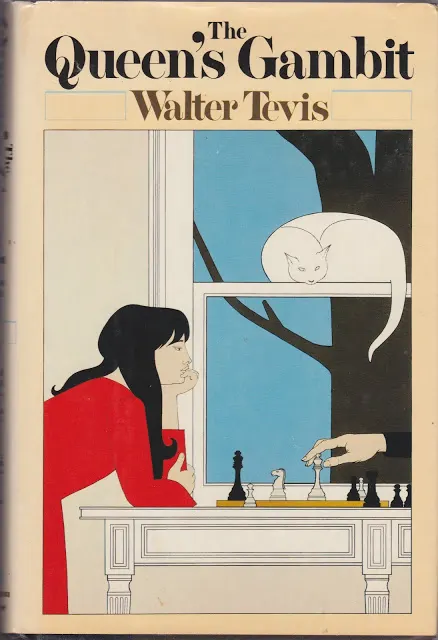
First edition of The Queen's Gambit published by Random House in 1983
Walter Tevis' fifth and second to last novel is about the ascent of female chess prodigy Elizabeth Harmon. Orphaned when her mother dies at age 8, Beth spends the next five years in the Methuen home for girls and learns how to play chess covertly with one of the janitors while combating an addiction to tranquilizers. Beth is eventually adopted and steals money to play in a tournament, where she finally becomes recognized as the talent that she is. The Queen's Gambit follows Beth from her humble beginnings to challenging the world champion at 18, and, despite being extremely chess-heavy in detail, is incredibly gripping and fun to read. I have yet to read or even hear of another book that deals with the plight of the female chess player in an almost always male-dominated field. The Queen's Gambit is easily in contention for my favorite of Tevis' novels, and this first edition features great jacket art by Will Barnet.

Tuesday, May 8, 2012

The Tin Drum by Gunter Grass

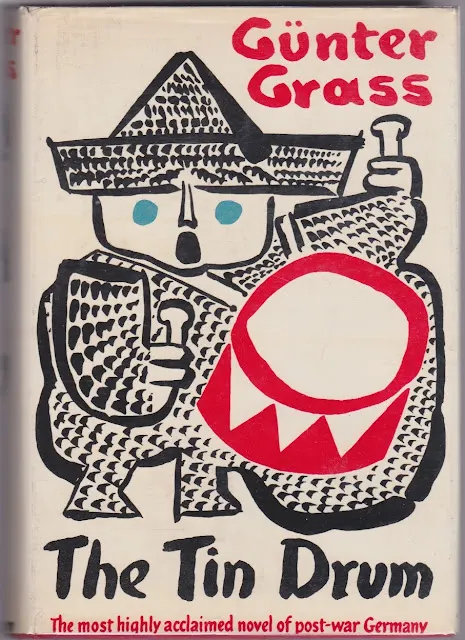
First American edition of The Tin Drum
Originally published in Germany in 1959, pictured above is the cover of the first American edition of The Tin Drum by Gunter Grass. Published by the Pantheon imprint of Random House in 1961—which specialized in foreign titles—The Tin Drum was first translated into English by superstar translator Ralph Manheim. Gunter Grass' first novel is, simply put, one of my favorite books; there is nothing quite like it, and in my opinion none of his other books really compare. A war ballad combined with proponents of magical realism, The Tin Drum recounts the epic of Oskar Matzerah and his family in Danzig, Germany before, during and after World War II. Oskar willed himself to stop growing at the age of 3, only maturing mentally, and can shatter glass with his voice. He dons a tin drum, which he can play to conjur any memory from the past. It is a ridiculous and special book. The cover drawing is one of my favorites—drawn by Grass himself—and has been incorporated in some way or another into nearly ever future edition (see below).

Oskar character on the back cover of a later Pantheon paperback
Another Oskar from the cover of a British Penguin paperback

Saturday, May 5, 2012

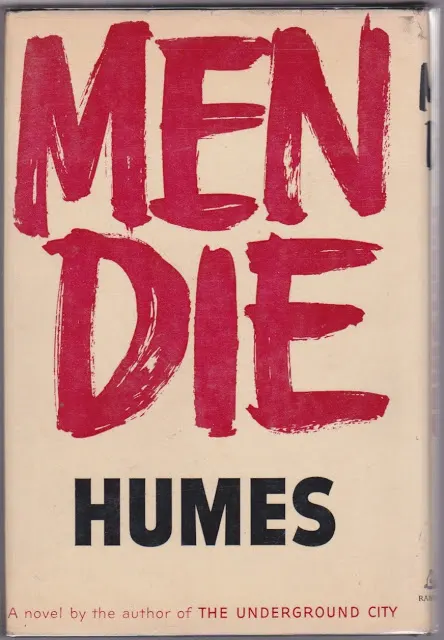
Men Die by H.L. Humes

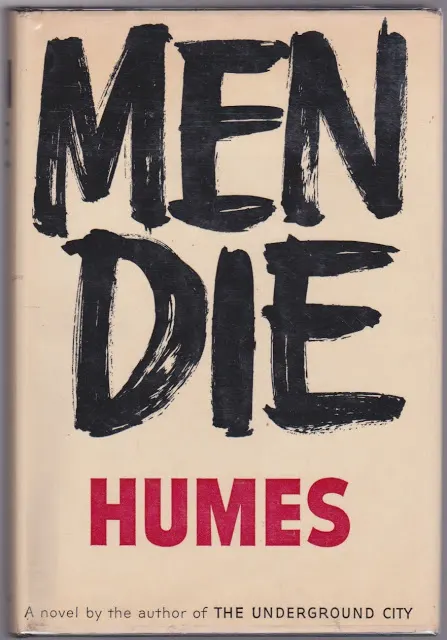
First edition of Men Die by H.L. Humes (front)
This is H.L. Humes' previously mentioned second and final novel, Men Die. It is much shorter (less than 200 pages) and was published the following year in 1959 by Random House to similar acclaim. While the title is maybe a little blunt, Men Die is much more daring and technically-inventive than The Underground City, in addition to being far more compact. It centers around an explosion in an American munitions depot just before the outbreak of World War II in the Caribbean. The Underground City is a better book in my opinion, but Men Die has its own merit and is also the last piece of writing from H.L. Humes. The back and front cover art is some of the finest I've come across—the current reprint only has the front title in black being that it's a paperback.

(back cover)

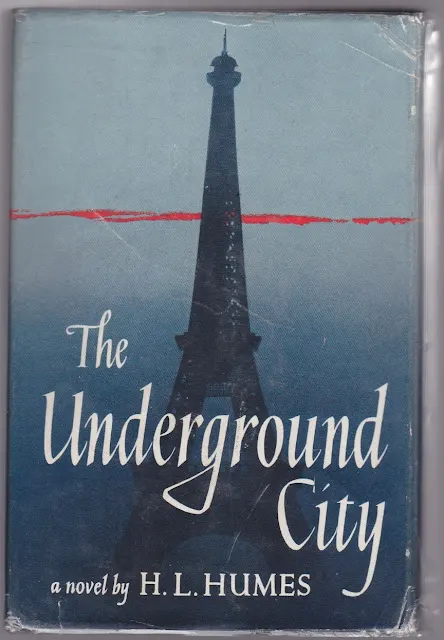
The Underground City by H.L. Humes

British First Edition from 1958
This is H.L. Humes' first novel, published in America in 1958 by Random House and in Great Britain the same year by Heinemann. It is a sprawling World War II novel (758 pages!) about the French resistance, politics, war, life, and humanity—it is without question one of my favorite books. Humes was a co-founder of the Paris Review, among many other things, and this was the first of two books he published in his lifetime. I have had the extraordinary pleasure of archiving Humes' papers, which are now currently in the process of finding a home, and I think it's fair to say at this point that I know a great deal about the man and his works. 

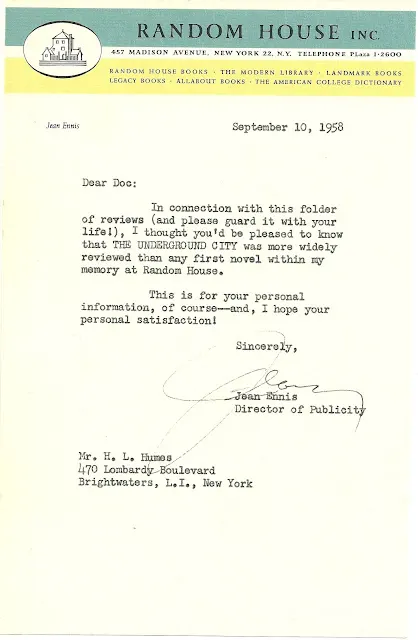
A note to Humes from the Publicity Department at Random House (image courtesy of the Humes Archive) 
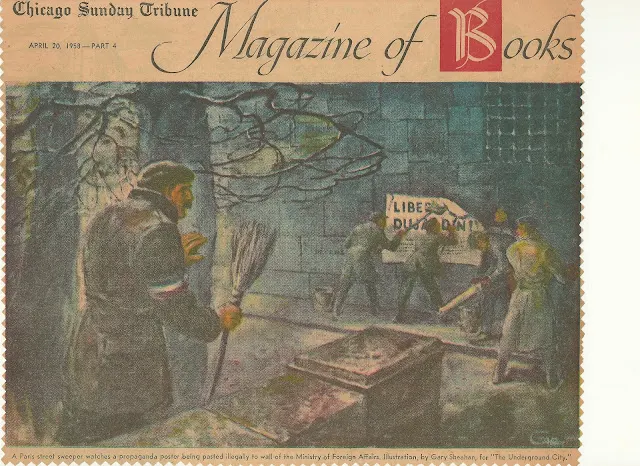
Part of a stellar review clipped from the Chicago Sunday Tribune (image courtesy of the Humes Archive)
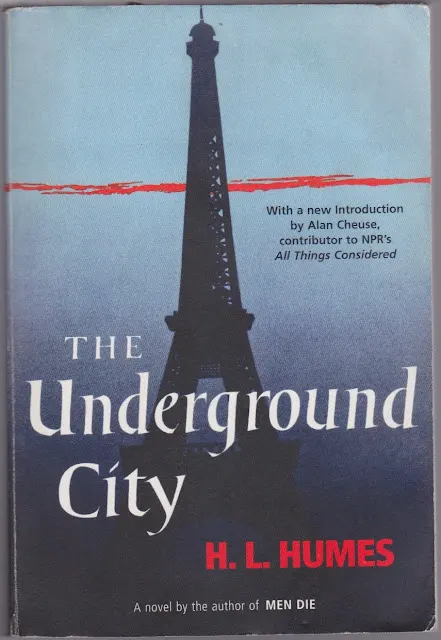
Both his novels, The Underground City in particular, are incredibly under-read and unknown despite being very successful upon release. Humes later suffered a breakdown that in many ways he never recovered from in the mid-1960's, and stopped writing for the most part. Both his novels were reprinted 40 years later by Random House at the beginning of 2008, which you should go and buy without question.

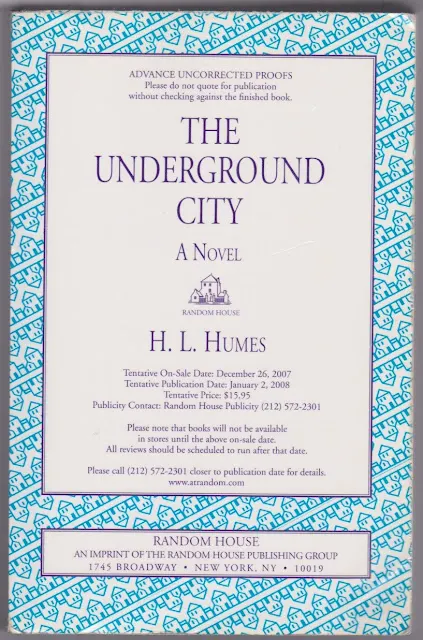
An advanced reading copy of The Underground City
Currently in print new edition of The Underground City